
How to Prevent Mold After Water Damage
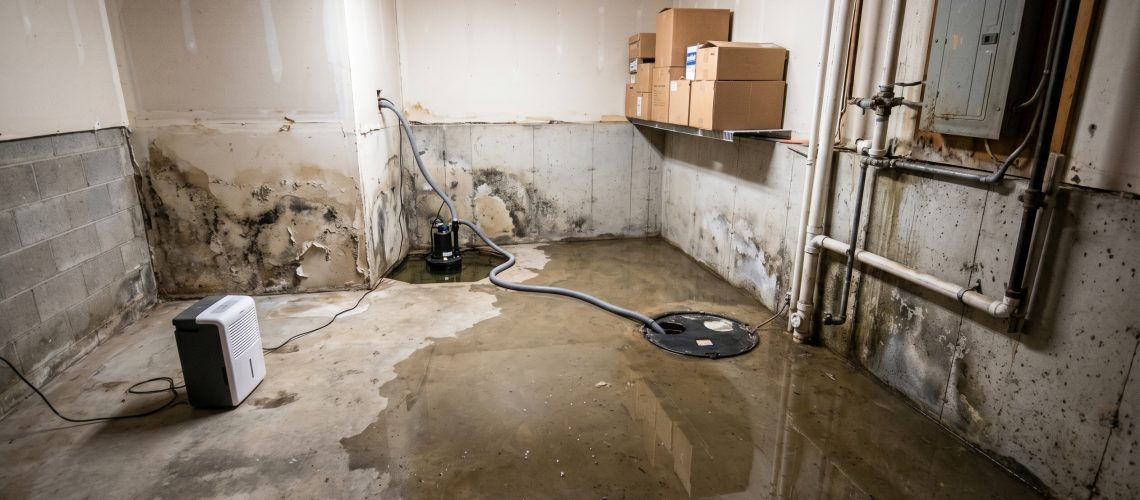
If your home has water damage, your first job is simple: stop the water, remove anything standing, and get the area dry fast. Mold can start growing in 24 to 48 hours, especially in drywall, carpet padding, insulation, cabinets, and other materials that hold moisture.
For a small clean-water leak, quick DIY cleanup may be enough. For sewage, floodwater, a soaked wall cavity, or anything larger than a small room, bring in a remediation team. Hidden moisture is where mold problems usually start.
Move fast, but start safely
Water damage feels urgent because it is. Still, do not rush into a wet area until you know it is safe.
Before cleanup:
- Shut off the water source if the leak is still active.
- Turn off power to the affected area if water is near outlets, appliances, or wiring.
- Move furniture, electronics, rugs, and valuables to a dry space.
- Wear gloves, eye protection, and a mask if the water looks dirty or the room smells musty.
- Take photos for insurance before removing damaged materials.
If the water came from a toilet backup, sewer line, storm flooding, or any source that may contain chemicals or bacteria, do not treat it like a normal spill. That kind of water can make people sick, and porous materials usually need to be removed instead of cleaned.
The first 48 hours matter most
Mold spores are already present in most homes. They only need moisture and the right surface to start growing.
Here is the practical timeline:
- First 24 hours: This is your best window. If you remove the water and dry the area well, you can often prevent mold entirely.
- 24 to 48 hours: Mold can begin developing, even if you cannot see it yet.
- After 48 hours: The risk goes up quickly, especially behind baseboards, inside walls, under flooring, and below cabinets.
- After several days: Porous materials may be too wet to save safely.
That is why professional restoration crews focus so much on moisture readings. A room can look dry while the wall cavity behind it is still damp.
Remove standing water first
Standing water has to go before drying equipment can do much.
For small clean-water leaks:
- Use a wet/dry vacuum for shallow water.
- Mop hard floors and keep changing the water.
- Use towels for corners, edges, and under cabinets.
- Pull up small rugs and dry them outside if possible.
For larger areas:
- Use a pump or call a water damage company.
- Remove water from low spots along walls and baseboards.
- Check closets, cabinet toe-kicks, adjoining rooms, and areas behind appliances.
- Do not forget crawlspaces or basements if water may have traveled downward.
One common mistake is cleaning the obvious puddle and missing the water that moved under flooring or behind trim. Water does not stay where you first see it.
Dry the structure, not just the surface
A towel-dry floor is not the same as a dry room. Drywall, subflooring, framing, insulation, and cabinets can hold moisture long after the surface looks normal.
Use:
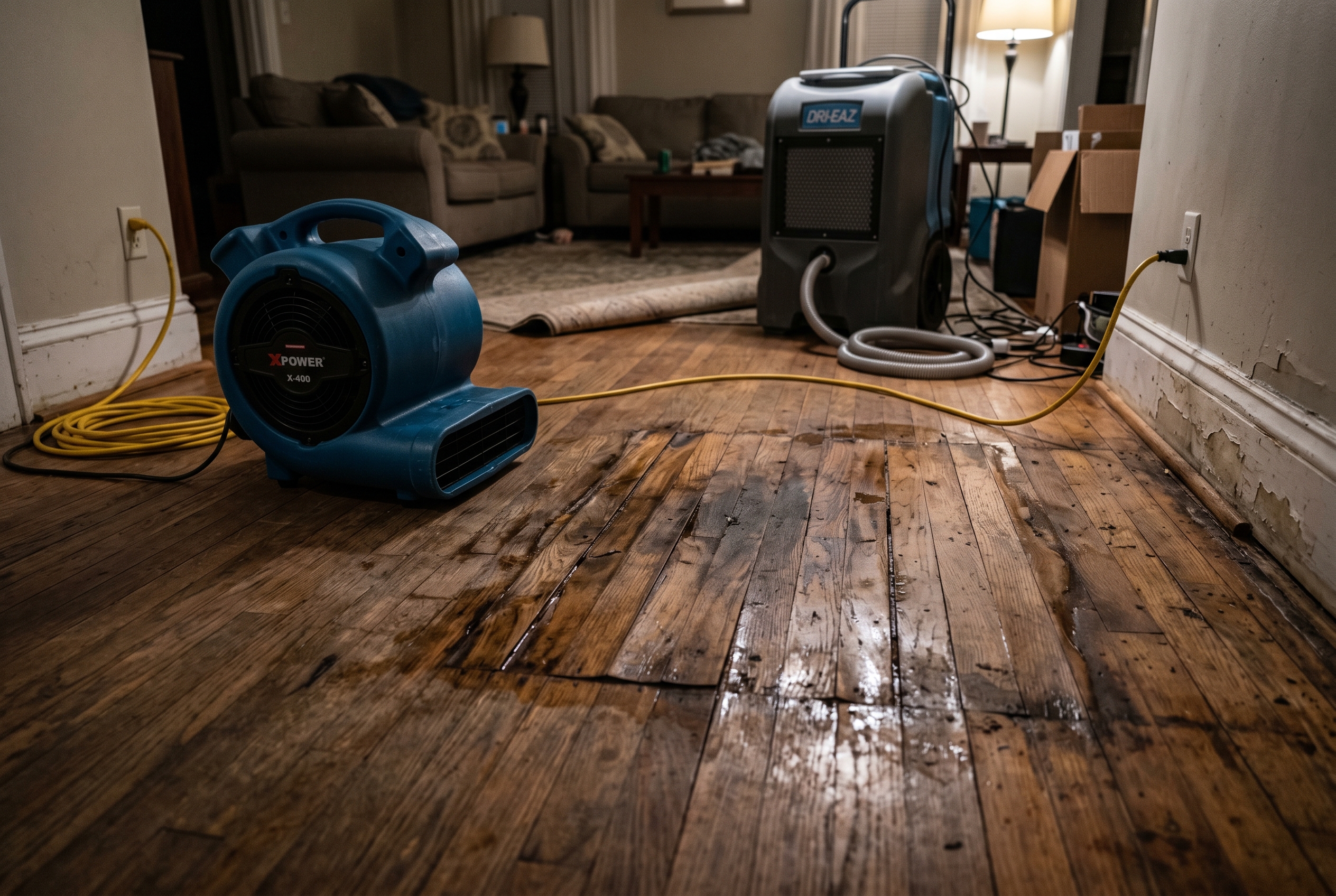
- Fans to move air across wet surfaces.
- Dehumidifiers to pull moisture out of the air.
- A moisture meter to check drywall, wood, flooring, and baseboards.
- Heat or HVAC to keep air moving and help evaporation, as long as it is safe to run.
Run fans and dehumidifiers for at least 72 hours after visible water is gone. Longer may be needed for wood floors, cabinets, crawlspaces, and rooms with poor ventilation.
Aim to keep indoor humidity below 50%. If the air stays humid, materials dry slowly and mold has a much easier time taking hold.
Know what can be saved and what should go
This is the part homeowners hate, and understandably so. Nobody wants to cut out drywall or toss carpet padding after a leak. But some materials are almost impossible to dry once they are soaked.
Usually remove and replace:
- Wet carpet padding
- Wet insulation
- Saturated drywall
- Swollen particleboard or MDF
- Porous materials touched by sewage or floodwater
- Anything with visible mold growth
Often salvageable if dried quickly:
- Tile and stone
- Concrete
- Metal and plastic items
- Some hardwood flooring
- Some furniture, depending on how wet it got
A simple rule: if you cannot dry it fully within 48 hours, or if contaminated water touched it, replacing it is usually safer than hoping for the best.
Clean hard surfaces after drying
Once the area is dry, clean hard surfaces to remove dirt, bacteria, and any spores that settled during the cleanup.
Good options include:
- White vinegar on many hard surfaces
- 3% hydrogen peroxide, after testing a small area first
- Commercial antimicrobial cleaners
- Soap and water for general cleanup before disinfecting
Bleach has limits. It can work on non-porous surfaces, but it does not penetrate materials like drywall or wood very well. It can also damage finishes and create unsafe fumes if mixed with other cleaners.
Whatever cleaner you use, follow the label and give it enough contact time before wiping it away.
Watch the area for the next few weeks
Mold does not always show up immediately. After water damage, keep checking the area for at least two to four weeks.
Look for:
- Musty odors
- New stains on walls or ceilings
- Bubbling paint
- Soft drywall
- Warped baseboards
- Buckling floors
- Condensation on windows or walls
- Allergy-like symptoms that get worse in that room
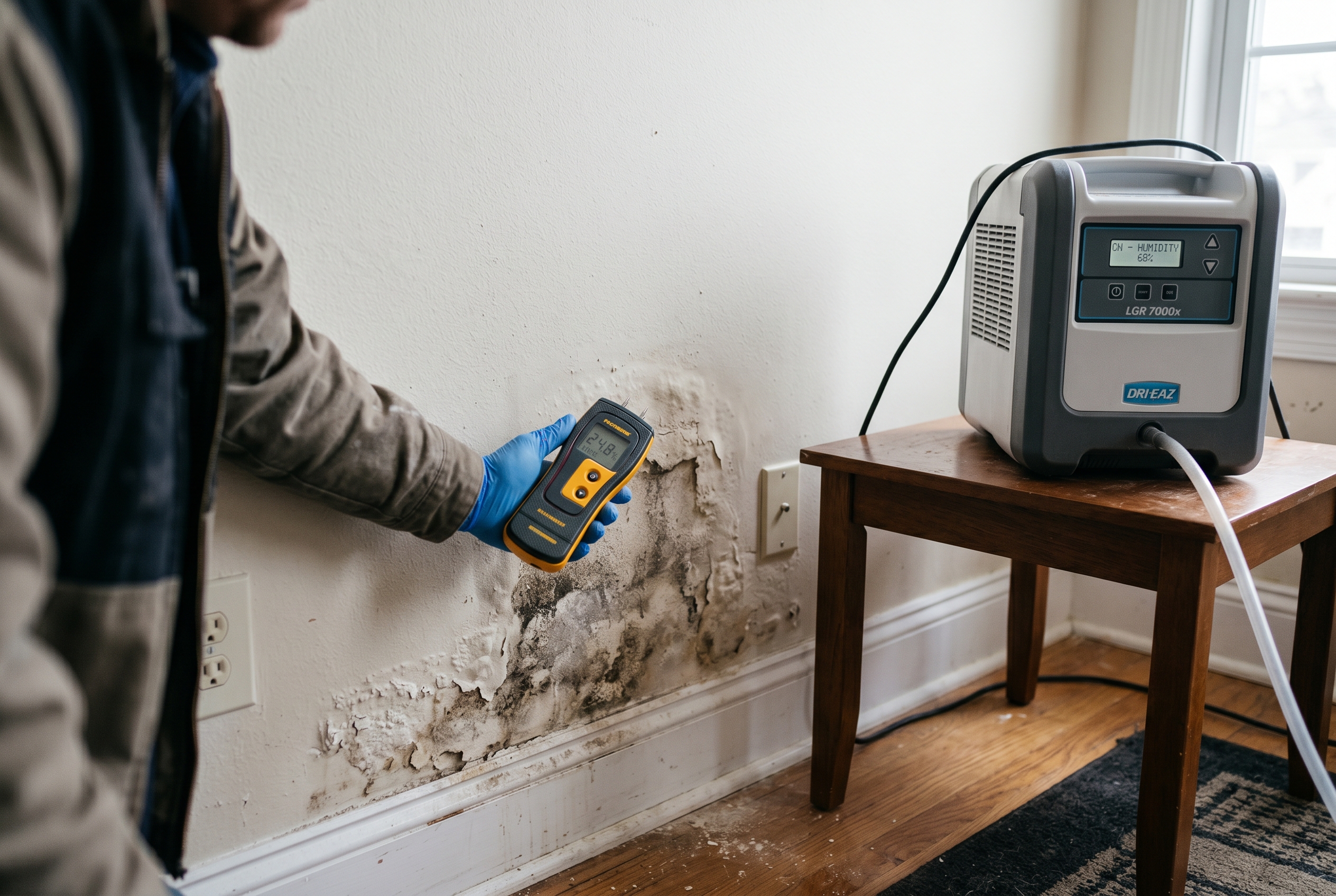
If you have a moisture meter, check the same spots every day for a few days. Readings should keep dropping. If they stay high, moisture is trapped somewhere.
When to call a professional
DIY cleanup is reasonable when the water is clean, the area is small, and you can access everything that got wet.
Call a professional if:
- The water came from sewage, flooding, or an unknown source.
- More than 10 square feet were affected.
- Water sat for more than 24 to 48 hours.
- Drywall, flooring, or cabinets are wet inside.
- You smell mold but cannot find it.
- Anyone in the home has asthma, allergies, or a weakened immune system.
- You are not sure whether the area is fully dry.
A remediation crew can check moisture inside walls and floors, set up commercial drying equipment, contain contaminated areas, and remove damaged materials without spreading mold spores through the house.
Prevent the next mold problem
After the cleanup, take a little time to fix the weak spots that caused the water damage in the first place.
Good prevention habits:
- Check under sinks and around toilets for slow leaks.
- Inspect the water heater, washing machine, dishwasher, and refrigerator supply lines.
- Clean gutters so roof runoff does not back up into walls.
- Seal foundation cracks and watch basement humidity.
- Use bathroom fans during and after showers.
- Keep indoor humidity between 30% and 50%.
- Install leak detectors near high-risk areas.
Small leaks cause a lot of mold claims because they go unnoticed. A $20 water sensor under a sink can save you from a much bigger repair later.
Bottom line
The best way to prevent mold after water damage is to act quickly and verify that the area is actually dry. Remove the water, dry the structure, replace materials that cannot be saved, and keep checking for hidden moisture.
If the water was contaminated, the damage is bigger than a small clean-water leak, or you are guessing about what is wet behind the walls, call a remediation professional. Mold prevention is a lot cheaper than mold removal.